
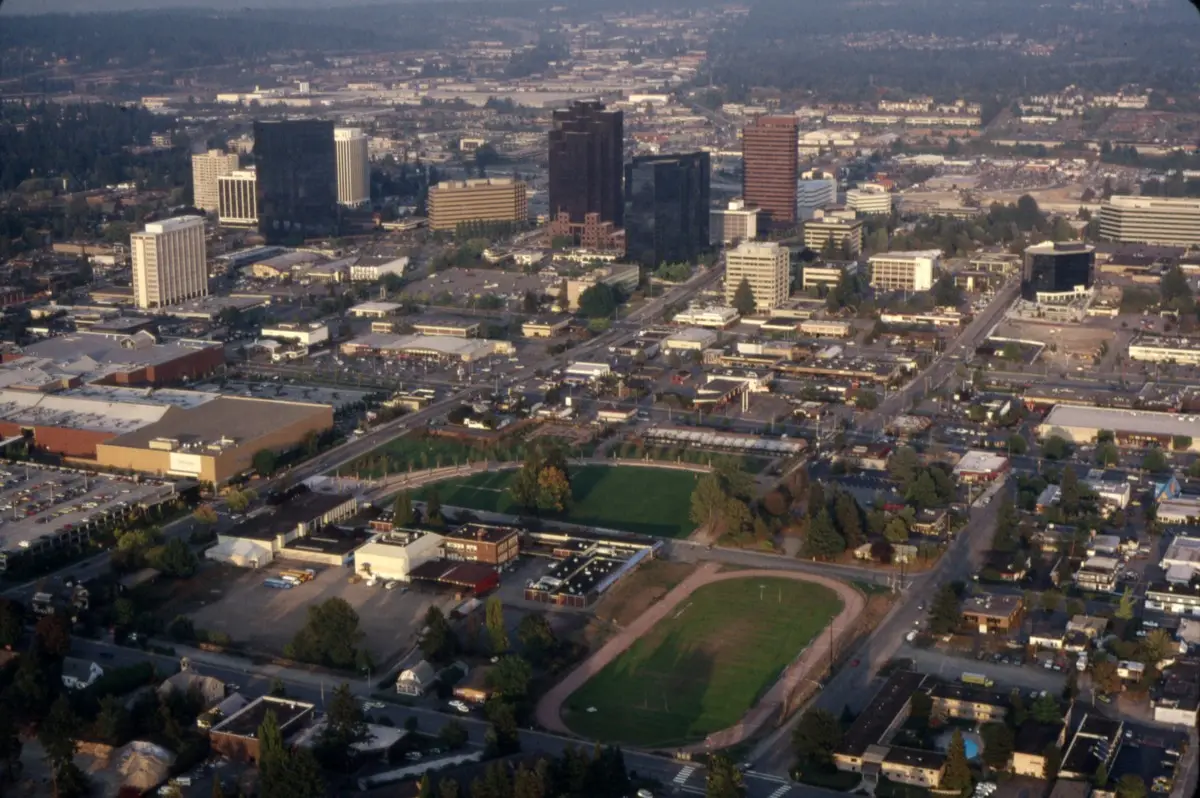
How Bellevue became an office market
Bellevue was mostly timberland until it was logged off and became farm country.† In the City of Bellevue's Downtown plan, serious building downtown waited for the first bridge across Lake Washington in 1940.† In the 1980s, high-rise office towers went up downtown and employment nearly doubled. † This page dates each step, from homesteads to light rail.
Last updated October 31, 2026
Homesteads, logging and the first plat
Eleanor Boba's HistoryLink.org essay starts with William Meydenbauer and a second settler, who arrived in 1869 among the first homesteaders in the Bellevue area.† In 1882, Isaac Bechtel Sr. bought land near today's downtown.† By 1890 the area had a sawmill, shingle mills, small farms and bachelor cabins. †
Downtown was once covered in huge, old-growth trees, the Eastside Heritage Center says, and farms replaced them once they were logged.† The Hewitt-Lea Lumber Company of Tacoma employed hundreds of men to log timber, and by 1910 the population had ballooned from a few dozen households to nearly 1,500.† Bellevue was platted in 1904. †
That same year, the Northern Pacific Railroad built the Wilburton trestle, opening up transport and land in the Bellevue Midlakes area.† From 1904, a rail line on the Lake Washington Belt Line carried passengers and freight along what became the I-405 corridor. † Old rail lines often become trails, roads or transit corridors. When a parcel backs onto one, ask the City what it is planned to become.
Japanese American farmers and the strawberry years
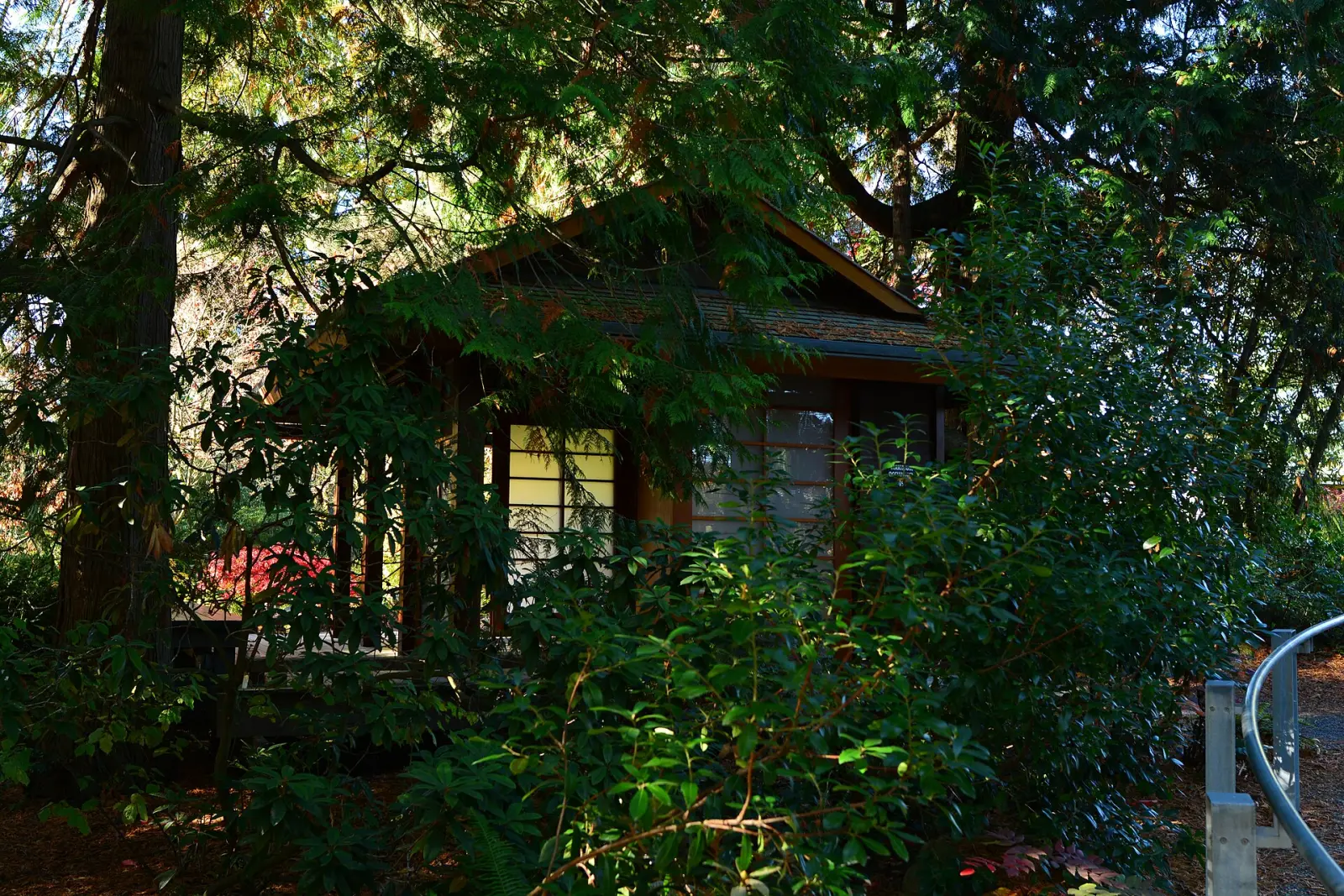
Japanese immigrants turned much of Bellevue's logged stump land into farmland.† They worked berry and vegetable fields from the early 1900s until their forced relocation to incarceration camps during World War II, and strawberries were the main crop.† Wilburton and downtown Bellevue were Japanese farmland too. †
Washington's Alien Land Law of March 2, 1921 "denied Japanese the right to purchase land," the Eastside Heritage Center notes.† A strawberry festival ran every year from 1925 until the Japanese farmers were removed in 1942. †
By mid-1942, about 60 Japanese families were gone, and only a handful came back after the war, in HistoryLink.org's account.† Much of downtown was later built on land those farmers had cleared.† Blueberries replaced strawberries after the war, and the City of Bellevue still owns and runs U-Pick blueberry fields. †
Ferries and floating bridges across Lake Washington
The Leschi auto ferry started service on the lake in 1913.† Eleanor Boba's HistoryLink.org essay calls the 1940 opening of the Lacey V. Murrow floating bridge across Lake Washington key.† It turned Bellevue from a farming community into a suburb of commuters. †
The City of Bellevue's Downtown plan agrees that serious building downtown waited for that first bridge in 1940.† The removal of the bridge toll in 1949 stimulated that growth.† The span was renamed in 1967 and was rebuilt and back in service by September 1993. †
Traffic started across the Evergreen Point Floating Bridge on August 28, 1963, after years of planning and bickering.† The state paid for it with $30 million in bonds.† The bonds were paid off by the end of the 1970s, and tolls ended in June 1979.† That bridge, completed in 1963, carries traffic to the north side of Bellevue.† Interstate 405 was completed in 1971. † Bellevue's commercial map follows its bridges and freeway ramps. Read a site's access the way a commuter would, from the ramp to the front door.
Incorporation in 1953 and the growing city
Bellevue incorporated in 1953 as a third-class city with a council-city manager government.† It had about 8,000 people and covered about six square miles.† Downtown was then a cluster of buildings along Main Street. †
Later additions expanded the city's footprint to about 34 square miles, adding the Crossroads neighborhood in 1964, Lake Hills in 1969 and Factoria in 1993.† Bellevue was named an All-America City in 1955, and again in 2021.† The Eastside Heritage Center describes how Bellevue became the primary commercial center for the new communities east of the lake. †
Bellevue Square, Crossroads and Factoria
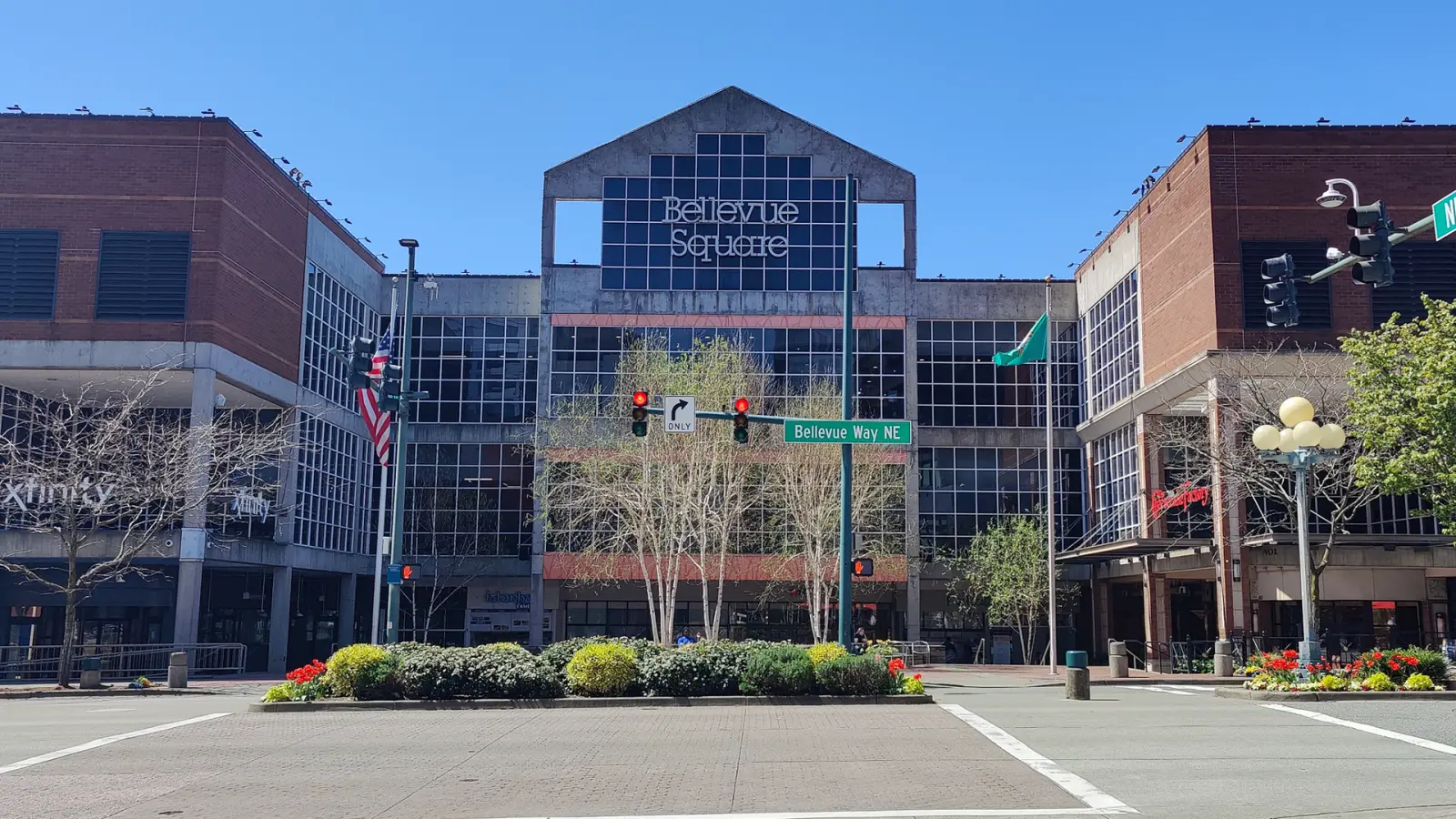
Bellevue Square opened in downtown Bellevue on August 20, 1946.†† HistoryLink.org's Alan J. Stein calls it the first regional suburban shopping center in the Pacific Northwest.† It began in 1944, when Kemper Freeman Sr. started buying property.† The site had been strawberry farms just a few years earlier. †
The Square drew department stores such as the Bon Marche, Nordstrom and J.C. Penney.† In the 1980s, Bellevue Square greatly expanded.† Kemper Freeman Jr. later turned his father's center into what Patrick McRoberts, also on HistoryLink.org, calls a first-class urban mall with 200 stores.† Crossroads Mall followed in 1962 and Factoria Square in 1977. † Many of today's retail corridors sit where a mid-century shopping center put them. If you are leasing near one, ask how the center's own plans could change your traffic.
The Downtown plan and the office towers
The City of Bellevue's Downtown plan describes rapid growth downtown in the 1960s, much of it suburban, with acres of surface parking.† In 1979 the city adopted the Central Business District Subarea Plan, which called for Downtown to be "the place to concentrate regional retail, major office, residential, hotel and institutional uses." †
The City of Bellevue's plan says the 1980s saw an unprecedented level of office construction in King County.† High-rise office towers reshaped the Downtown Bellevue skyline and nearly doubled employment.† Two of the Downtown buildings from those years are the 21-story Bank of America Tower (1988) and the 25-story Hyatt Regency Bellevue (1989).† The current city hall opened in 2006 on NE 4th Street, next to the Meydenbauer Center. †
Building did not always go smoothly. A 210-foot tower crane collapsed in downtown Bellevue at the site of Tower 333, a 20-story office building. † The plan that zoned Downtown for towers still drives what gets built there. Before you buy or lease near the core, read the current Downtown code, not the skyline.
Banks, Microsoft and the employers
Many banks moved their corporate headquarters to Bellevue, making it one of the richest cities in the state, Eleanor Boba writes for HistoryLink.org.† On January 1, 1979, Microsoft leased offices in the Old Bank Building in downtown Bellevue.† A year later it moved to an office park near Highway 520. †
PACCAR (Pacific Car and Foundry) moved its headquarters from Renton to Bellevue in 1969.† Eddie Bauer set up headquarters in Bellevue in 2007; Boeing, long a presence in Eastgate, sold its technology campus there in 2021.† As of 2025, Amazon is the largest employer in Bellevue, followed by T-Mobile and Meta, HistoryLink.org reports. †
Overlake Memorial Hospital opened on October 16, 1960, with 56 beds.† Bellevue Community College opened in 1966 and became a full-fledged college in 2009. † When employers change, buildings change use with them. Underwrite an older office building for the next tenant type as well as the current one.
East Link light rail reaches Bellevue
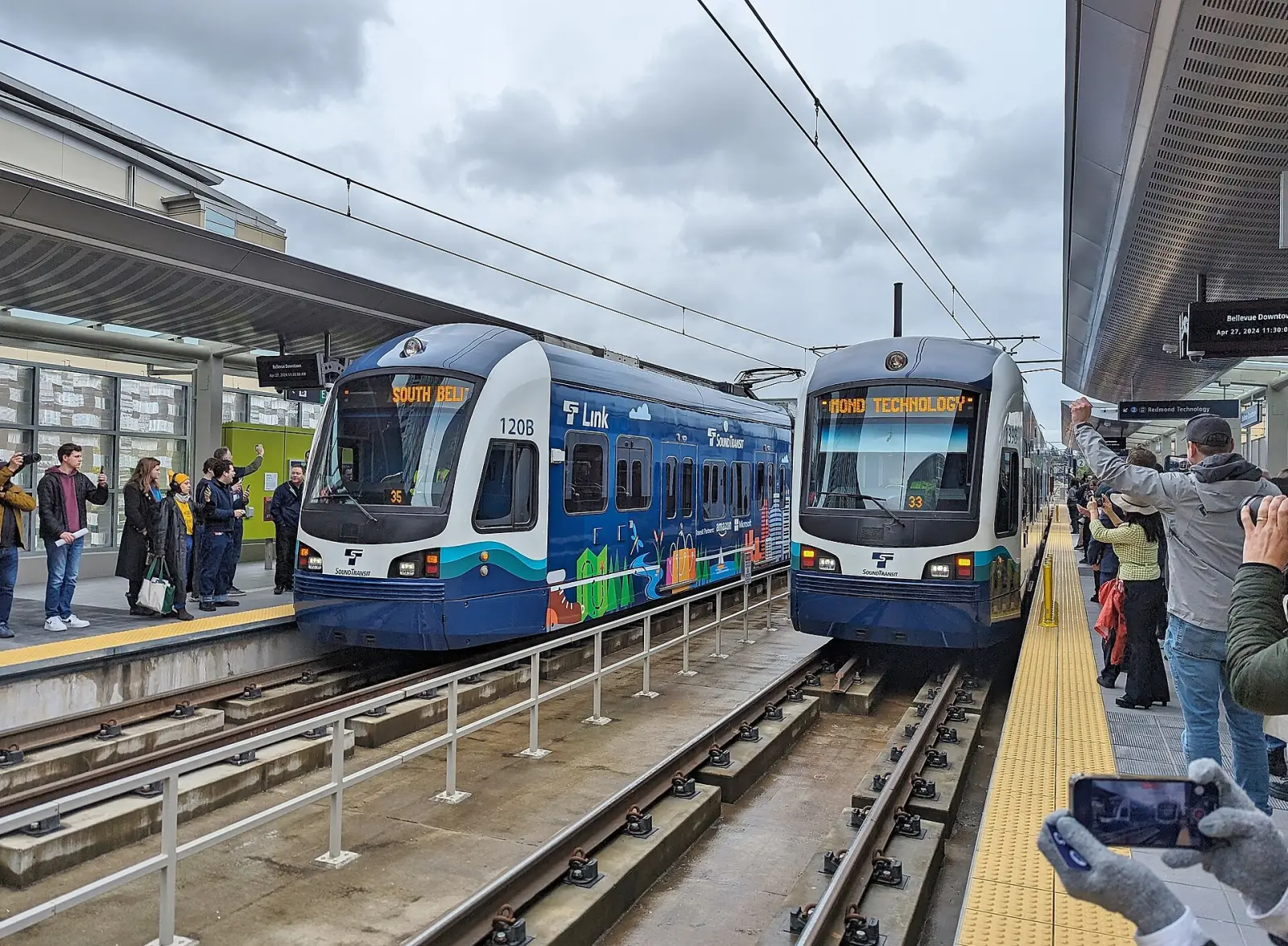
Construction of the East Link began on April 22, 2016, including a one-third-mile rail tunnel beneath 110th Avenue NE in downtown Bellevue. †
The line opened from South Bellevue to Redmond Technology Station on April 27, 2024.† HistoryLink.org logs the first train with regular passenger service across Lake Washington leaving at 10:27 a.m. on March 28, 2026.† That completed the rail connection between Bellevue and Seattle across the I-90 bridge corridor. † Station areas are where the City now plans its growth. The development tracker follows what is being proposed around them.
Bellevue timeline
- 1869
The first homesteaders arrive, Eleanor Boba writes. †
- 1904
Bellevue is platted. †
- 1904
The Northern Pacific Railroad builds the Wilburton trestle. †
- 1913
The Leschi auto ferry begins service on the lake. †
- 1925
A strawberry festival begins, running until 1942. †
- 1940
The Lacey V. Murrow floating bridge opens across Lake Washington. †
- 1946
Bellevue Square opens in downtown Bellevue on August 20. †
- 1953
Bellevue is incorporated. †
- 1960
Overlake Memorial Hospital opens on October 16 with 56 beds. †
- 1962
Crossroads Mall opens. †
- 1963
The Evergreen Point Floating Bridge opens on August 28. †
- 1966
Bellevue Community College opens. †
- 1971
Interstate 405 is completed. †
- 1979
The Central Business District Subarea Plan is adopted. †
- 1979
Microsoft leases offices in the Old Bank Building on January 1. †
- 1988
The 21-story Bank of America Tower (1988) joins the Downtown skyline. †
- 1993
Factoria becomes part of the city. †
- 2006
The current city hall opens on NE 4th Street. †
- 2016
East Link construction begins on April 22. †
- 2024
The line opens from South Bellevue on April 27. †
- 2026
Regular light rail service across Lake Washington begins on March 28. †
Bellevue history questions
When was Bellevue, WA incorporated?
What did Bellevue grow before the offices?
When did Bellevue Square open?
August 20, 1946, in downtown Bellevue. †
When did Microsoft come to Bellevue?
When did light rail start running across Lake Washington to Bellevue?
March 28, 2026. The train with regular passenger service across Lake Washington left at 10:27 a.m. that day. †
Looking for an agent? The FAQ explains who this site names and how to check a license.
Next step
History explains where the districts came from. The facts page shows how the city is run and planned today.
Sources
Every fact on this page carries a dagger that links to its record on the sources page, where the publisher, the date, the address of the document and an archive copy are listed for each one.